

Having a living, breathing green roof can bring wildlife, birds and insects into any garden or commercial development. Not only that but it can improve air quality and provide additional insulation.
There is a lot involved in specifying and building a living green roof and from the start understanding the strengths and weaknesses of your building is imperative. There are a few key parameters – the weight-bearing capacity of the roof, the slopes and angles involved, the type of waterproofing present, where the sun falls at any time of day, any planning restrictions and accessibility for construction and maintenance.
Sedum green roofs can help support biodiversity net gain and are a great food source for bees, butterflies, hoverflies and moths. They can be relatively low-maintenance and in the right conditions sedum will flower for half the year and maintain foliage all year round.
Green roof kits can come with the main ingredients to transform a flat roof or a gently sloping roof into a delightful green roof, full of plants and flowers. Not only that but green roofing solutions come in two real types – lightweight solutions and extensive applications. They can be straightforward to install but there are still hits and tips and a whole new language to understand.
So, by way of introduction we have developed a simple A-Z that is designed to de‑mystify green roofing and to help to create the confidence to tackle this popular roofing practice on your next roofing development.
A is for Accessories
Aside from the green roof structure and plants there are a host of accessories to support green roofing.
- Green Roof Edging
- Drainage Board
- Filter Fleece
- Protection Fleece
- Cobbles
- Substrate
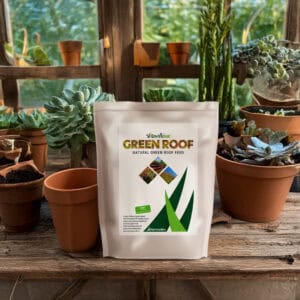
- Green Roof Feed
B is for Biodiversity Net Gain
Biodiversity Net Gain (BNG) aims to leave the natural environment in a measurably better state than it was beforehand.
C is for Cobbles
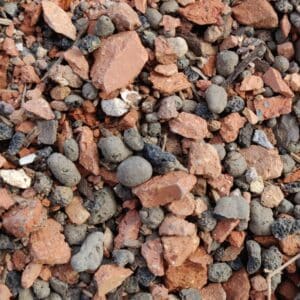
Cobble stones will give a green roof a pleasing finish. They are used as a fire break, to provide free draining areas and to provide habitats.
According to the GRO Code they should be installed 300 mm wide around all perimeters, including rooflights and rain outlets. They should also be installed 500 mm wide where there are building openings like doors, windows or opening roof lights. Install the cobbles to a depth of 50 mm or at least to the same depth as the substrate/plant layer.
D is for Drainage Board & Drought Tolerant
Drainage Board:
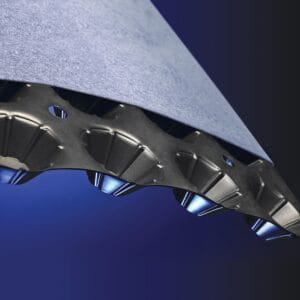
For a flat roof that has a slope of three degrees or less, install a layer of drainage matting, as sedums hate having wet feet.
Drought Tolerant:
Sedums are succulents. They are generally drought-tolerant and come in a wide variety of colours and species.
E is for Edging & Extensive Roof Blankets
Edging:
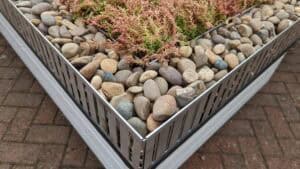
Lightweight aluminium green roof edging. Slots allow water to drain, whilst retaining cobbles or substrate. The base should allow the weight of the green roof system or pebbles to hold the edging in place.
Extensive Roof Blanket:
Sedum blankets are grown outdoors for nine to twelve months. The species chosen should have disease resistance, drought tolerance and long flowering periods. The matting itself is made using recycled products. So, it is strong and easy to handle.
Seek the advice of a Structural Engineer before undertaking a green roof project.
To complete your green roof installation, you will also need:
- Lightweight green roof substrate – the growing medium to sustain plant life.
- Drainage board – A layer to control water by allowing just the right amount to be stored to sustain the sedum plants and allowing the excess to safely drain away.
- Suitable edging – An edging not only improves the looks of the installation but ensures adequate drainage.
F is for Filter Fleece & Feed
Filter fleece sits between the drainage layer and the substrate. It functions as a filter layer, preventing fine particles from the growing medium from clogging the drainage system while allowing water to pass through freely.
G is for Green Roofing
Green roofs have a range of benefits and come in two flavours, wildflower and sedum. Sedum Mats are mats of low-growing sedum plants. They are available for both flat roofs and pitched roofs.
Meadowmat Wildflower can be used on green roofs – Floral Focus. It offers a variety of wildflower plants but needs a maintenance plan and an effective substrate layer.
H is for Hoverflies
Hoverflies will be attracted to wildflowers and sedum.
I is for Insulation:
A green roof can help prevent flooding, filter pollutants, absorb noise and provide food for wildlife.
During the winter a green roof can also provide up to an extra 25% insulation in dry conditions. In summer a green roof can keep properties cooler by an average of 15°C.
J is for Just check how much weight your roof can cope with.
K is for Kits – Flat Roof / Pitched Roof
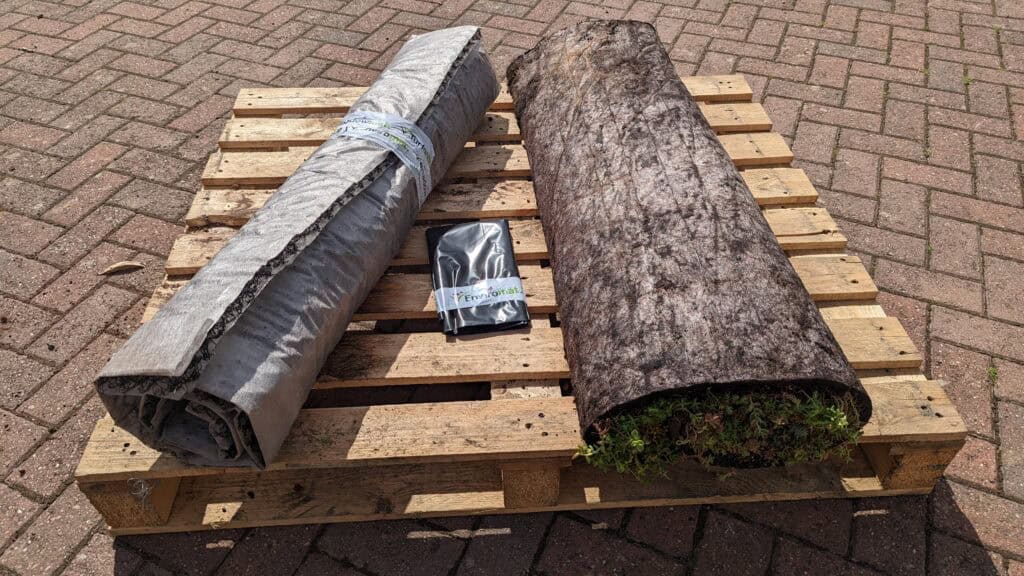
Kits come with everything you need to create a delightful green roof.
There are several components.
- Root barrier: Protects your waterproofing from potential root damage.
- Drainage Matting: Sits between the root barrier and your Enviromat® Sedum Matting to help provide optimum growing conditions for sedum plants.
- Enviromat® Sedum Matting: With sewn-on water retention matting. The “green” part of your green roof.
L is for Loading & Lightweight Sedum Tray
Loading:
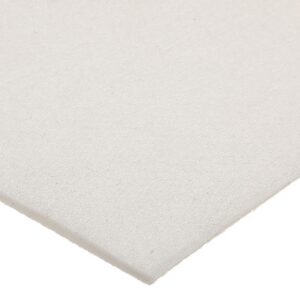
Every green roofing system is different. Our build-up weighs around 42 kg per square metre when saturated, but you will need to walk on it to install and maintain it so the roof must support 120 kg per square metre. Always allow for “live loading.” The temporary extra weight like snow or somebody stepping on the roof.
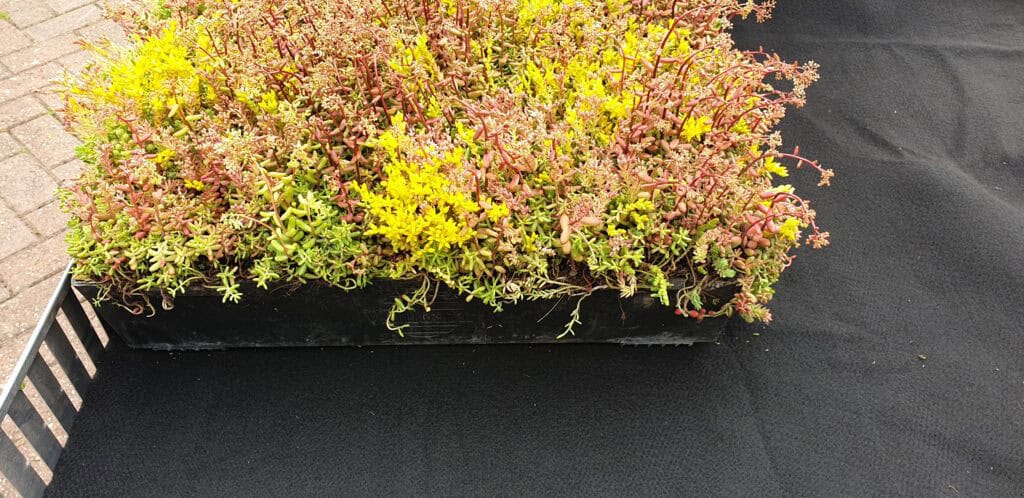
Lightweight Sedum Tray:
A lightweight sedum system supplied full of sedum and substrate – giving a completely self-contained green roof solution.
M is for Mats
Our green roof mats come in two flavours, Meadowmat Wildflower and Enviromat Sedum. Enviromat Sedum Mats are mats of low-growing sedum plants. They are available for both flat roofs and pitched roofs – both designed as a low maintenance green roof solution.
Sedum Mats are a low maintenance planting solution for green roofs. They were developed in the 1960s for commercial roofs. In simple terms, a slab of low-growing flowers for green roofs and groundcover.
N is for Nutrients
Green roofs and sedum plants need fertiliser to remain healthy. Make sure you use the right mix and formula. It should be a slow-release organic feed.
O is for Occasional Watering
Sedums are drought tolerant and will only need an occasional watering during long spells of dry weather.
P is for Protection Fleece & Pollinators
Protection Fleece:
Protects the waterproofing layer against damage caused by drainage boards during green roof installation.
Pollinators:
Have suffered a dramatic decline – insects, birds, butterflies, bees, moths and hoverflies.
Q is for Quiet
Green roof systems can help reduce noise. The combination of substrate, plants and trapped air make them an ideal solution as a natural sound insulation barrier.
R is for Radiation
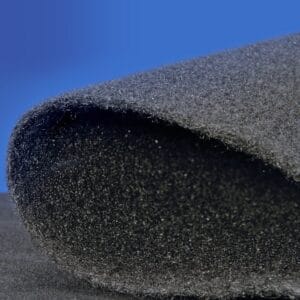
Electromagnetic waves from transmitting stations may be effectively shielded by a vegetation layer. Green roofs may be capable of reducing electromagnetic radiation penetration.
S is for Substrate, Sedum & Slopes
Substrate:
A balanced green roof growing medium, engineered for optimum plant performance and reduced loading.
Sedum:
Sedums are succulents. They are a great food source for pollinators. Generally drought-tolerant they come in a variety of colours and species. They are tolerant of most conditions apart from being wet all the time.
Slopes:
Choose a building that gets a good amount of sunshine. If the roof is in the shade for more than half a day, sedum plants will not get enough light.
A slope of over 20 degrees isn’t practical. It’s difficult to anchor the plants and rainwater will run off too quickly. Slopes between 10 and 20 degrees are best but they need irrigation.
T is for Tools – no specialist tools required.
U is for Build-Up
The green roof build-up isn’t a substitute for waterproofing. Before you start the roof must be watertight and in good condition.
Add a roof edging unless your roof has an upstand. Roof edging will prevent the vegetation blankets from becoming dry and stop wind uplift. Water should drain freely.
V is for Variety
Sedums come in a variety of colours and species.
W is for Weight Bearing & Watering
Weight Bearing:
Our build-up weighs around 42 kg per square metre when saturated. It will need to be able to support 120 kg per square metre. Allow for “live loading.”
Watering:
When everything has been installed, water the plants to the point of runoff. Don’t let them dry out in the first few weeks. But too much water will encourage weeds to grow.
X: The X factor for your garden
Y is for Yellow Wildflowers
Birdsfoot Trefoil – found in Meadowmat Floral Focus which is suitable for green roofs.
Z is for The Roofing Zeitgeist
A green roof can support biodiversity net gain. It can improve air quality and provide additional insulation.


